

This is a living document collecting my thoughts on what makes a great conference. These observations come from more than 15 years of speaking at and attending events across three industries: software development, design, and game development.
During that time I’ve given more than 100 talks to audiences around the world, at events ranging from small gatherings of a few dozen people to conferences with more than 20,000 attendees.
It has become increasingly clear to me that the most memorable conferences tend to share certain patterns. I wanted to start capturing those patterns and observations here, however incomplete and still evolving they may be.
My hope is that these notes might help organizers create better events.


Why Conferences Matter
In an era where nearly all information is available online, it’s reasonable to ask wether in-person conferences still matter. Talks can be recorded, tutorials can be watched on YouTube and communities exist year-round on Discord, Slack and Social media.
A good conference starts by framing the value the right way. Not as an exchange of knowledge from speakers to attendees (or sponsors to customers) but as a moment in time where communities become real.
In person events are full of friction. Everyone has to move themselves to another city or another country. They have to physically occupy the same space, attend the same talks, socialize at the same venue. Online communities are devoid of such friction. As a result, the community that’s built at a conference and the community that is built online have different characteristics.
There’s a realness that comes from meeting your peers face to face. All of the fluff that so often surrounds online discourse falls away. There is no hype, just passion. There is no engagement hook, just curiosity.
Instead of making followers, you make friends.
There is no better vehicle for this than the in-person conference.
Positioning
Think of a conference website a bit like a party-invitation. Sure the party might have food and drinks, or in the case of a conference; talks and networking, but that’s not what makes your event special. Far too few conferences spend time on developing their unique selling point. Why is THIS conference the one to attend? What can attendees (and speakers) expect to get out of it, besides the basics.
The greatest conferences are the ones who understand and lean into a unique angle. Often that’s steeped in culture or the geography of where the conference takes place.
Every year, people make the long journey to Logroño, a valley town in northern Spain, to attend NS Spain: an iOS and macOS developer conference. It’s a fantastic conference put on by a talented group of people. But it’s also very much a conference that understands why people would want to travel to go there. The conference party takes place in a Vineyard and it’s carefully planned so that the conference ends right as the local wine-festival starts up.
Deep Dish Swift takes place in Chicago and obviously feature copious amounts of Chicago style Deep Pan Pizza. Arctic Conference takes place in Oulu and prides itself of being the most northern iOS developer conference. Workshops include ice-fishing and the conference party features sauna.
Find what makes your event special and double down on it. People are not there to learn something they could watch online. They are there to have an experience. The more you can theme that experience, the more memorable you can make your conference.


Speakers
The speakers make up the bulk of the content of your conference and no amount of surrounding local cultural events can save a poor performing lineup at your event.
I think it helps to think of your speakers as a group of people hired to put on a memorable show. They’re your ambassadors and your performers and you need to choose them carefully.
In my career I have both spoken at legendary lineups where everything just magically clicked and at lineups where the whole show felt disjointed and stale. There is an art to setting the right lineup and making them shine on stage. The best conference organizers develop a sixth sense around this when assembling their team and setting the schedule.
CFPs (Call For Papers) are a common way for conferences to ingest talk topics and populate their lineups. This is a great tool if your top level direction revolves around certain topics. Maybe you want this edition of your event to focus on the role of Artificial Intelligence in your domain? Great! Then you use a CFP and select talks that come in around that topic.
However, in my experience, what separates mediocre conference organizers from good ones is the ability to see across topics and personalities to get the right balance of both content and people on stage.
This is why most of the best conferences are made by people deeply embedded in their communities and with a huge network of acquaintances. Conference organization doesn’t just require topical knowledge, it requires people skills.
A perfect lineup is like a movie, it features a wide cast of different personalities. Newcomers and veterans. People with deep technical knowledge and showmen. Introverts and extroverts. Different styles of presentations on topics that might be related but doesn’t repeat itself.
Too homogenous a group and you end up with a boring conference. Too disparage a group and you end up with no central gravitation.
If you do your job right, with the right people and the right amount of guidance, you will see themes emerge from your conference. A fantastic lineup will deliver a kaleidoscope of perspectives that stay with everyone long after the event ends. You can’t force these perspectives. They’re the product of you assembling the right people at this time and place. I’ve seen it happen again and again and it’s magical.
It’s as if these truths were woven into the content across talks and throughout the entire event. Your speakers were just the conduits. So make sure you choose good conduits.
Schedule
Once you’ve found a good lineup of speakers it’s time to set the conference schedule. There are a lot of decisions that can make or break a good agenda.
There are many ways to structure a conference, but I have found that the best ones share some similarities.
First of all, the best conference is a single track conference. Everyone participates in the same experience, listens to the same talks, are exposed to the same questions and go through the motion of the event at the same pace. It is the most cohesive and unifying setup. Multitrack conferences tend to be more chaotic and only really excel at very large scale. Avoid it unless you have a very good reason to go that route.
Avoid very long scheduled days. Start early and end early is usually a good mantra. Depending on the topic, most people can only realistically keep up attention for somewhere between 4-6 talks. Less if it’s very technical, a few more if it’s more digestable.
Talk slot lengths is also a deciding factor in fatigue during conferences. I have found that 30-45 minutes is ideal. 1 hour slots are just too long. If you can’t get your point across in 30-45 minutes, then 1 hour isn’t going to help.
The sooner you realize that talks are really just a catalyst for conversations, the better. You want to give ample time around talks for people to ask questions, stretch their legs and have conversations around what they just experienced. 2 talks followed by a break is a good formula.
Be very mindful of the order and groupings of talks. Start the day with high energy speakers. The very first talk, the keynote, sets the tone and should ideally capture some of the essence of why everyone is gathered. The middle of the day is great for more in-depth or technical talks. Afternoons should again be open to more unique stories, fun formats, panels, podcast recordings and other types of content where the audience is actively involved. An example of a great schedule could look something like this:
Opening remarks (10m)
Keynote (30-45m)
Talk (30-45m)
Noon Break (30m)
Talk (30-45m)
Talk (30-45m)
Lunch (60m)
Talk (30-45m)
Talk (30-45m)
Afternoon Break (30m)
Panel (30-45m)
Closing Remarks (10m)
The biggest pitfalls of scheduling is trying to cram too much into a day and having multiple similarly paced pieces of content right after each other. A good conference day has the pacing of a movie. High energy openings. A deep middle with time for reflection and conversations. A twist in the 3rd act with laughter and surprise.
It’s easy to think that as long as you have good speakers with interesting talks, you can just slot them in whenever. The truth is that the schedule does a lot of the heavy lifting in elevating a decent day into a great one.
Sponsors
Sponsors are important for the economics of a conference. I have organized two conferences in Copenhagen, and we couldn’t have made those events without the financial support of our sponsors.
Likewise conferences are a great way for a sponsor to both support a worthwhile endeavor while also getting an excellent channel to market their product directly to the right audience.
It is every conference organizers job to make sure that this intersection of interests are best served. I think the guiding principle should be to ask how a sponsor will make the in-conference experience of the attendees better. Sponsor swag is cool. A 5 minute ligtning presentation of the product on stage is probably fine. a 30 minute speaking slot? No. There is a fine line between sponsoring something and straight up turning your conference into a marketing platform.
I think the best conferences understand this relationship and continually asks how a sponsors support will make the experience at the conference better.
Online Community
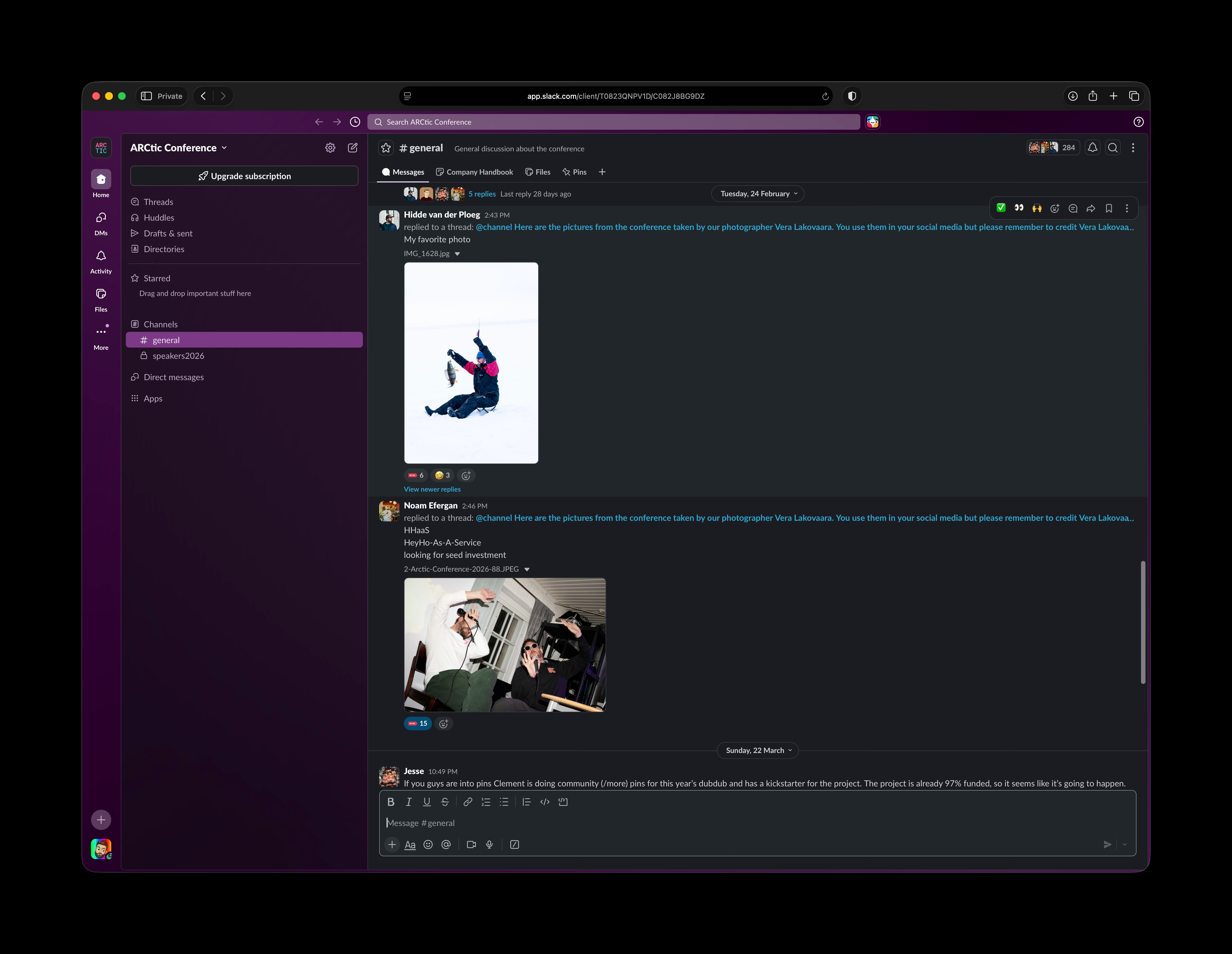
One area where many conferences miss out is a lack of an online counterpart to the physical event. This could be a Slack Space, a whatsapp group, an X community or discord server.
You want to create a dedicated space for your attendees and speakers to connect and communicate around the event. Once your purchase a ticket (or are invited to speak) you’ll get access to this space. Here everyone can get hyped for the event, make travel arrangements, share tips etc. During the event, this space can be used to collect questions, notes on talks and coordinate everything from meetups to dinner dates. It’s also a great channel for the organizers to send out information about the day, events or other activities.
Once the conference ends, the place remains a space to share memories and maybe get hyped for future editions. If you’re smart about it, this space will grow each year with new speakers and attendees and create a group of alumni of interesting people. This will help you drive ticket sales, create fomo and generally just extent the magic of your physical event.
MC
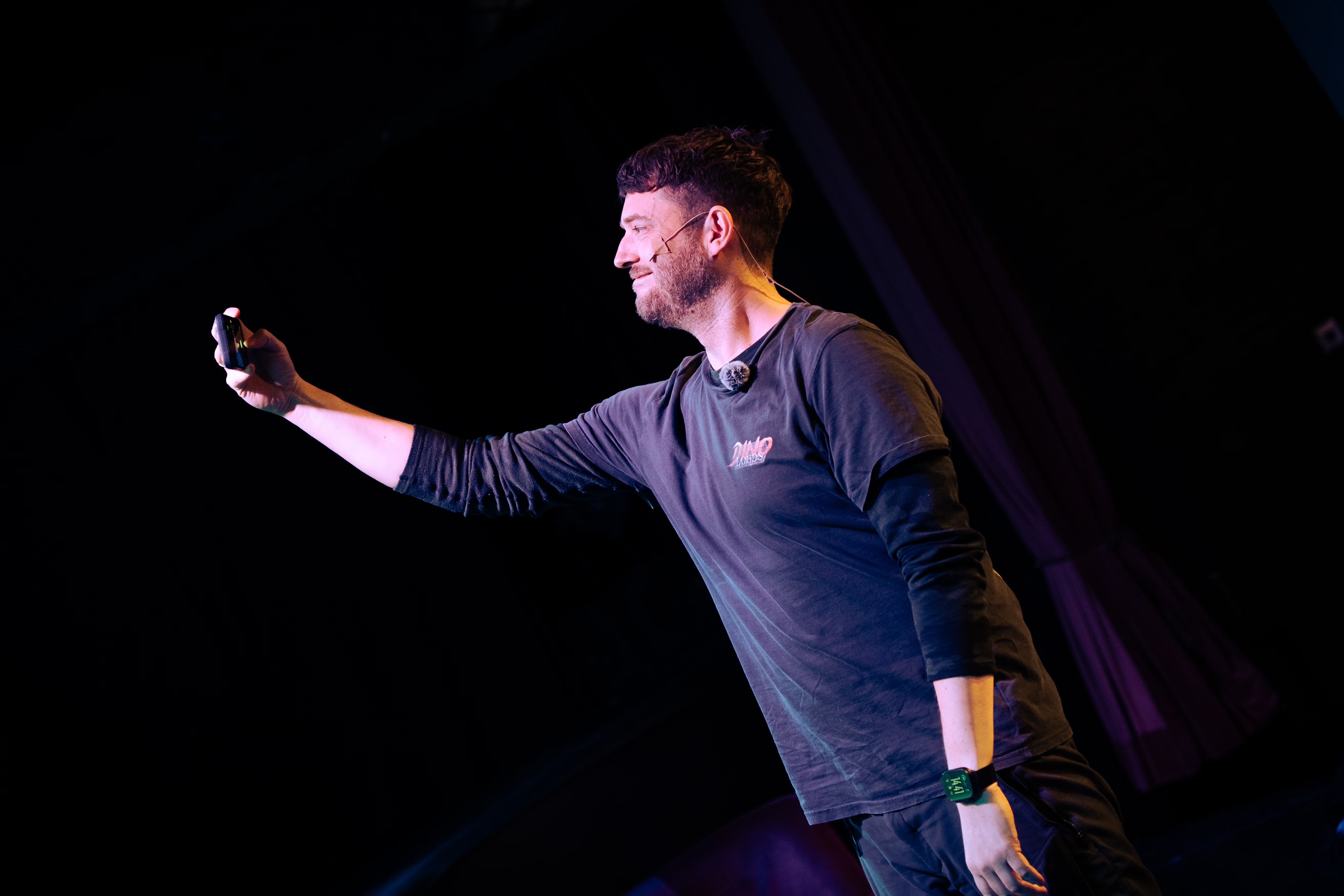
Every good single track conference should have an MC. A host that guides everyone through the entire event. This person should introduce every speaker, announce breaks and deliver practical information. A good MC is disarmingly charming and creates a red thread throughout the event.
The MC could be the conference organizer themselves, but I have found that having someone else do the microphone controlling actually works wonders. This puts less strain on the already tough job of being the organizer and creates a distance that allows for more humor when presenting the event. I’ve both seen it done successfully by someone from the community or from someone completely outside of the community.
Find an MC with a quick mind and a big heart.


Photo & Video
During the event you want to invest in professional photo and video being recorded. This is not only going to help you market future editions of this conference, it is also going to help audience and speakers share their experience at your event.
If you want maximum bang for your buck, you don’t hold this content back, you share it live as it’s being recorded. A dropbox folder that is topped off with fresh pictures and videos during the day creates a content bank that everyone can use on their social media. The impact that this can have on your conference brand (and by extension your sponsors) is not to be underestimated.
You can share this content as it comes in from SD cards straight to that online community we discussed earlier. Speakers will love to share great photos from their talks on X, Instagram and LinkedIn. Attendees will share video snippets of quotable moments from the talks they just heard. The audience for these things can easily number in the hundreds of thousands.
Similarly I suggest you record all the talks and make them available online with your branding after the event. This content will have a long shelf life and continue to give you traffic for years to come. Coordinate with speakers and let them also post this content to their channels. The goal is not ownership, it’s distribution.
Beyond the Schedule
Once we start realizing that conferences are just the excuse we need to make friends across the world, we can start to optimize our events for friendship-making. While a great lineup, a unique venue, the right sponsors or a fun MC can make a conference day memorable, it’s what happens outside of the schedule that changes lives.
A good conference understands that the talks are just the inspiration. The conversation starter. All the really meaningful stuff happens after. And so, it’s the job of the organizers to create time and space for these things to happen. We want to maximize the amount of fun and serendipitous connections attendees can have.
There are many ways to do this, ranging from encouraging the attendees to organize these things themselves to straight up arranging events on everyones behalf. Here’s some things I have found that’s worked great.
An opening night before the first day of the conference. Not exactly a party, but more of a pre-conference kickoff. The best ones let people pick up their badges early and mingle. Ideas range from sponsor-powered open bar to team building exercises. At Valiocon we made Smores on the beach in San Diego.
A local flavored trip of some sort helps solidify the positioning of your conference and create a dedicated space for these shared moments. At Arctic Conference there’s a pre-conference ski-trip that people can sign up for. At NS Spain there’s a wine festival that most of the conference attends after the last talk.
It can be something as simple as an arrangement with a local establishment and the explicit message that this restaurant or bar is the unofficial hangout place for attendees during the conference.
The point of these extra events is to encourage everyone at the conference to spend time together in a different setting than the venue.


Speaker Dinner
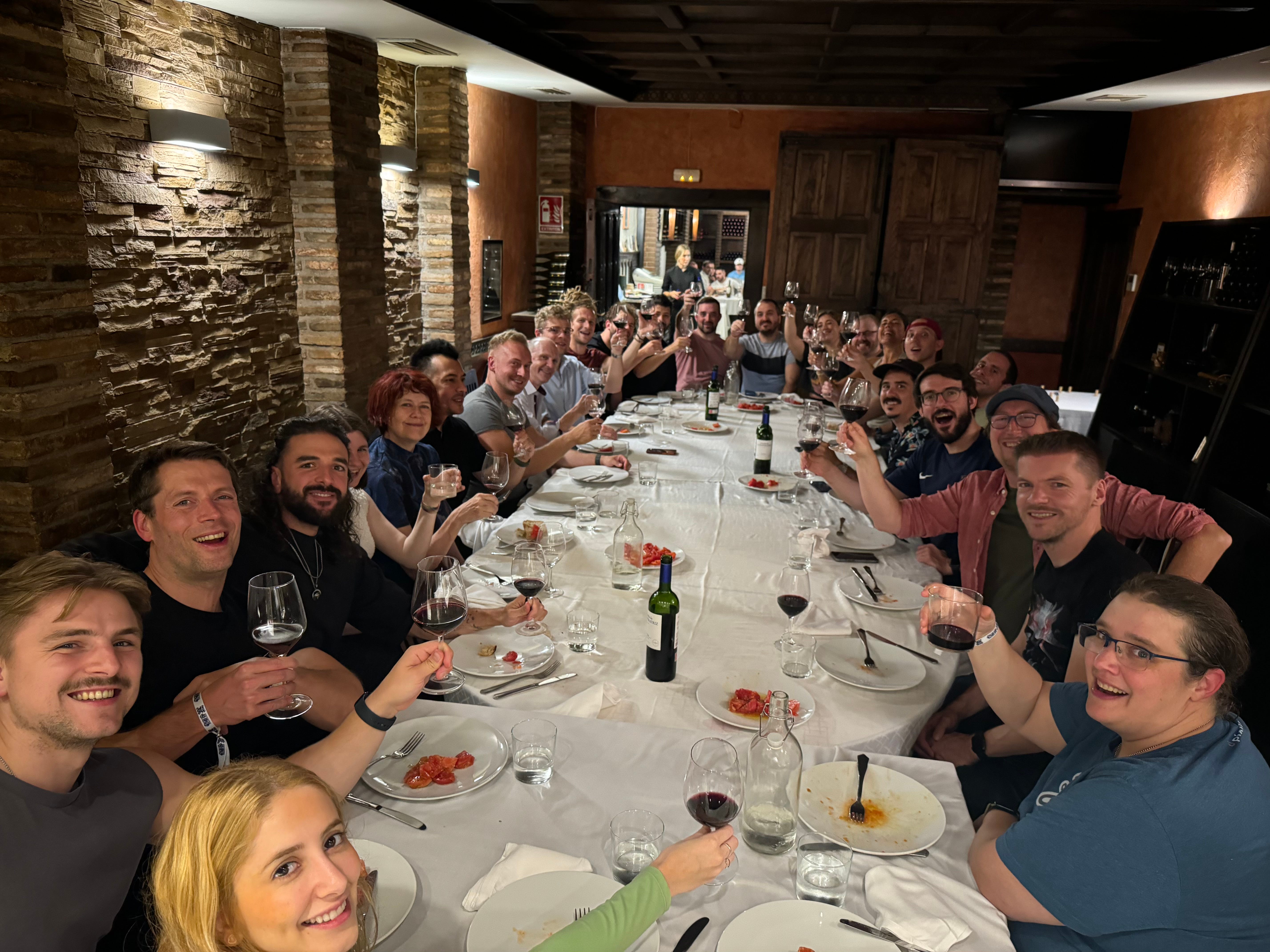
If you fly in speakers, then do yourself a favor and arrange a speaker dinner. The point of the speaker dinner isn’t only to treat your speakers to a nice evening. Its to consolidate and strengthen the show that you’re about to put on. Make sure that everyone organizing the event is also participating. Include AV team, Photographer, Sponsors and MC if you can.
This will give you an evening where everyone who are going to share the stage can meet each other.
If you do this right, you’ll strengthen the bond in the speaker group, make them root for each other and galvanise the entire lineup.
Ideally the speaker dinner should happen before or at least very early during the conference for this effect to be felt on stage.
Conference Party
Every conference should have a conference party. Either on the last day or the second to last day of the event. I have been part of huge spectacles with thousands of people in downtown LA and small gatherings at a local pub in Italy. There is no blueprint for the perfect conference party, it is very much an extension of the thinking behind the ‘Beyond the Schedule’ section. You’re optimizing for friendship making. What exactly that means at your conference will differ.
Some of the best conference parties I have been to have had some sort of musical or humorous component. They’re memory machines, and so some sort of photo booth or other recorded shenanigans is usually a big hit. The conference party is both a time to reflect on what the conference is all about while celebrating the friendships you’re making.


Signs of a Good Conference
As I hope is clear by now, a lot of things go into making a great conference. And they come in many different forms.
So what should we actually be aiming for?
Rather than optimizing for scale, production value, number of talks or high profile speakers, the best conferences share a few simple signals. You can feel it when you’re there.
People stick around after talks instead of rushing off
Conversations continue long after the schedule ends
Speakers spend time with attendees
The hallway feels as important as the stage
Attendees return year after year
First-time attendees feel immediately welcome
The schedule feels like a guide, not the main event
You leave with new relationships, not just new information
It produces memes
When these things are happening, you’re no longer just running a conference. You’re hosting a community.